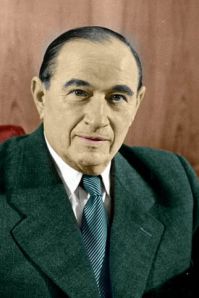
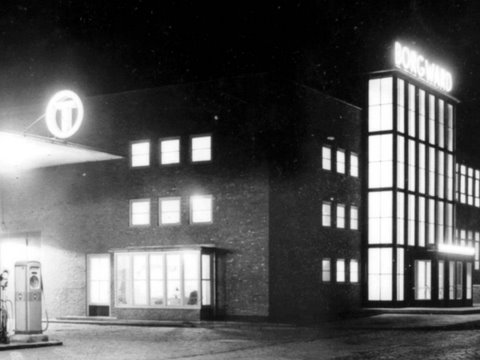
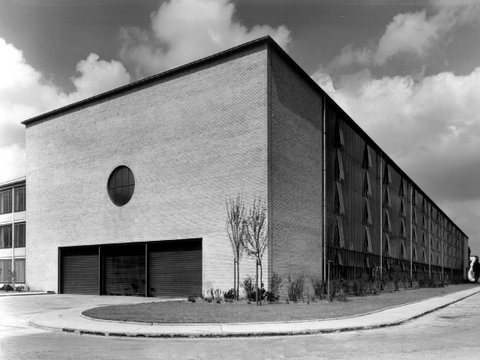
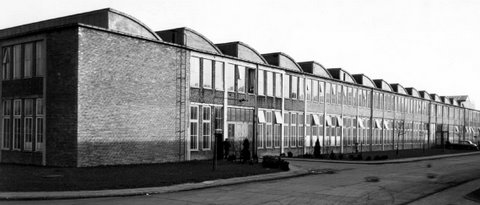
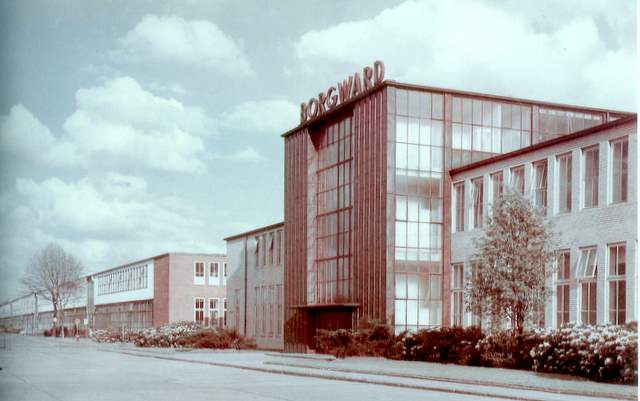
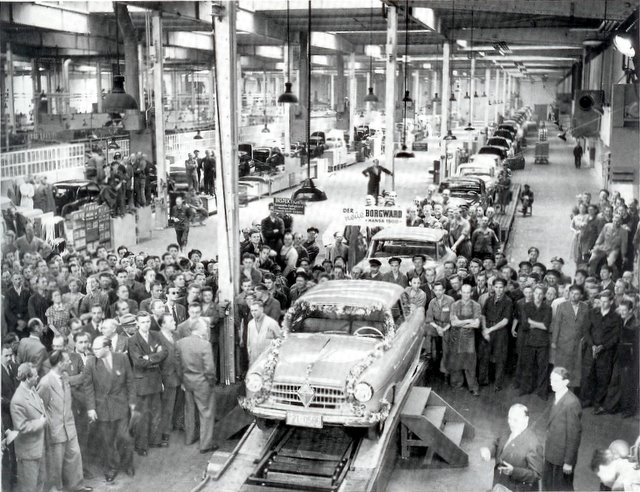
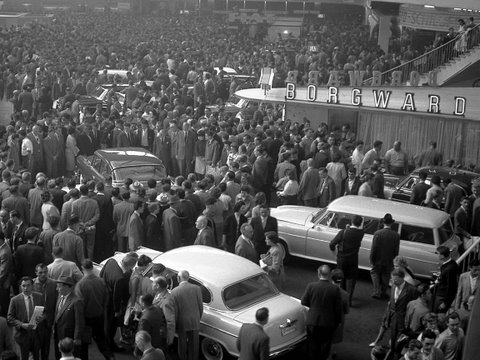
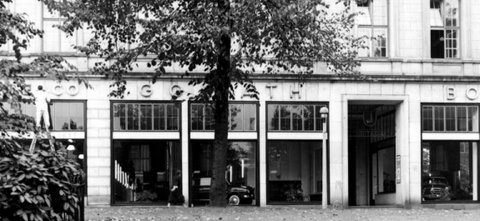
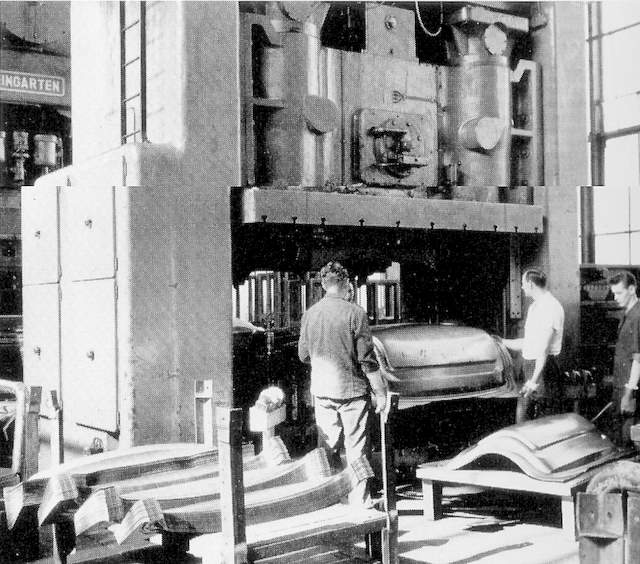
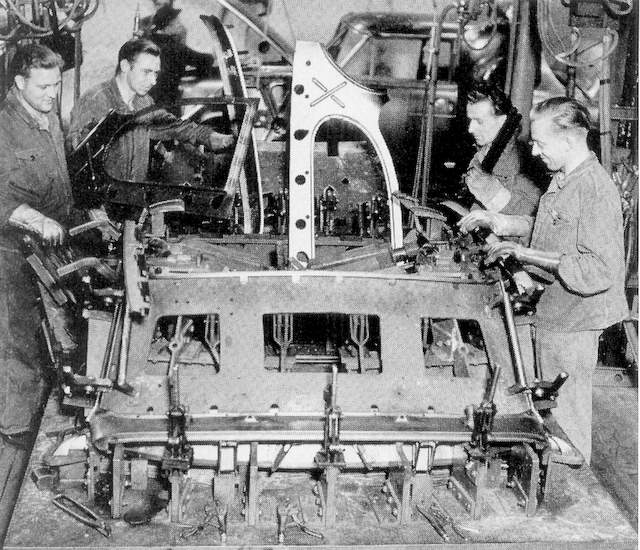
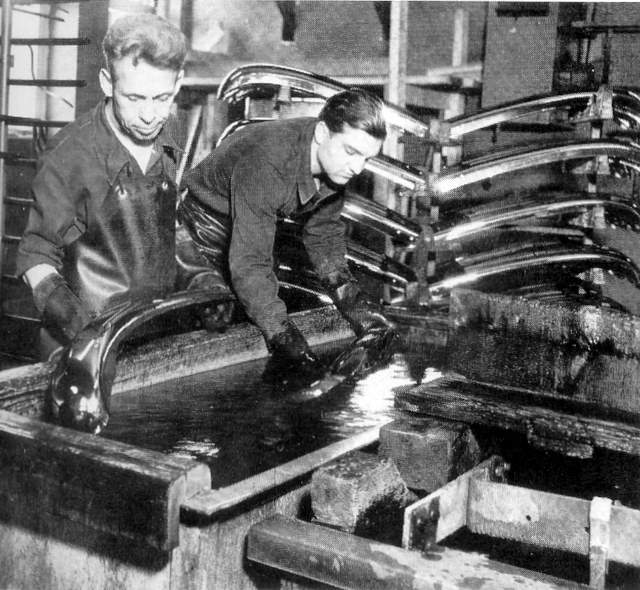
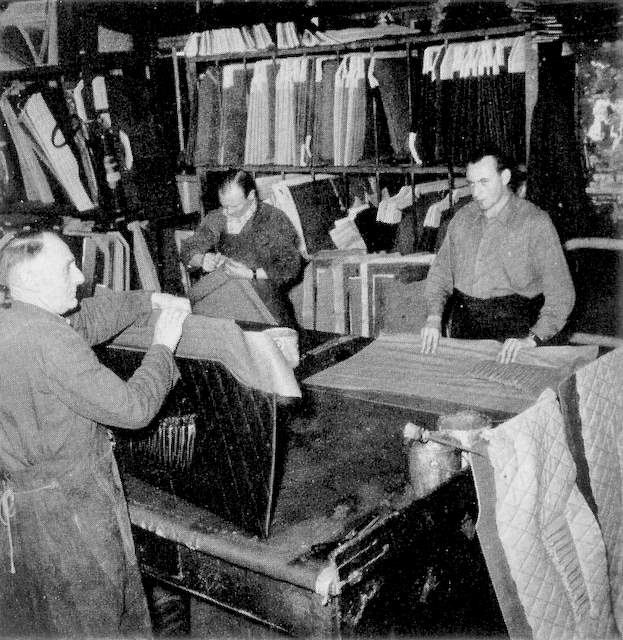
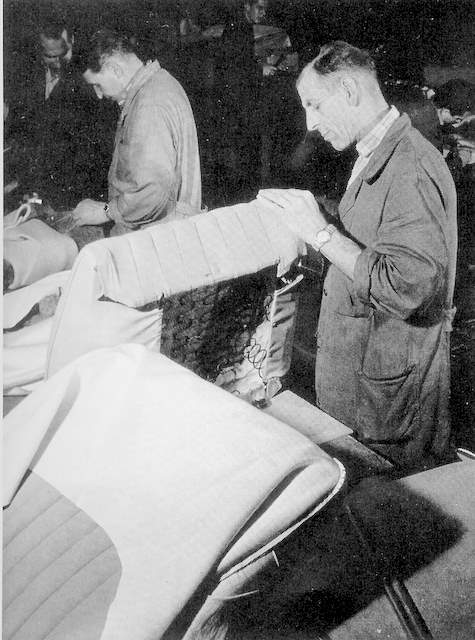
Carl Friedrich Wilhelm Borgward was born on 10 November, 1890, in a Hamburg suburb. After leaving school at 16 years old, he became an apprentice locksmith but World War 1 intervened. He joined a company that produced tyres but with Carl Borgward they switched to making radiators and body panels for the firm Hansa-Lloyd. By 1921 Carl had been repeatedly promoted until he became the sole owner of the Bremer Kuhlerfabrik Borgward and Co. G.m.b.H. in Bremen. He was desperate to manufacture his own cars but lack of financial help forced him to abandon development of a 2 cylinder sports car project but he did however manage to produce a three-wheeled 120cc delivery cart, with a single front wheel, for the post office in 1924 called ‘Blitzkarren’.
In 1926 his next model was the first ‘Goliath’ and had a single rear wheel with a two stroke 200/250cc engine. The Goliath Rapid and similar 350cc Goliath Standard were joined by two four-wheel models in 1929 and 1930. The ‘Express’, a two cylinder two stroke 600 and ‘Superior’, a four stroke 2,350 cc 4 cylinder 1.5 tonne lorry forging the Goliath Werke so successfully forward that by 1931 it had successfully taken over Hansa-Lloyd. After producing his first car, a 200cc three wheeler with a single front wheel and ‘Dickey Seat’ and top speed of 35 miles per hour, Carl Borgward produced the four wheeled Hansa 400/500. This was followed in 1934 by the beautiful four-stroke Hansa 1100 and Hansa 1700 models, including Cabriolets, and the fast and elegant Hansa twin carburettored 1700 Sport-Cabriolet. From 1938 the range was further enlarged to the Hansa 2000cc and Hansa 3500 but from 1939 the Hansa 2000 became the Borgward 2000 and the Borgward 2300 the first cars to be made under the Borgward name.
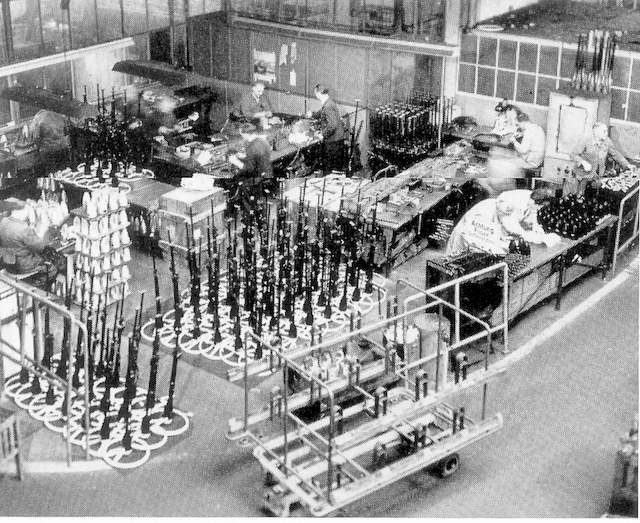
During World War 2, the Borgward plant became an armaments factory and Carl Borgward returned to what was left of his factories in 1948. He decided that the best way of increasing his raw materials allocation was to have three different car companies and therefore three times the amount of raw materials! The companies were Goliath, Lloyd and Borgward Hansa. This was a great idea but in practice having three entirely separate engineering, styling and sales departments was rather costly and in one instance it resulted in Lloyd managing to develop a new 900cc flat four water-cooled engine, when Goliath already had something similar! Subaru actually used the Lloyd powerplant as a prototype for its boxer engines in Japan.
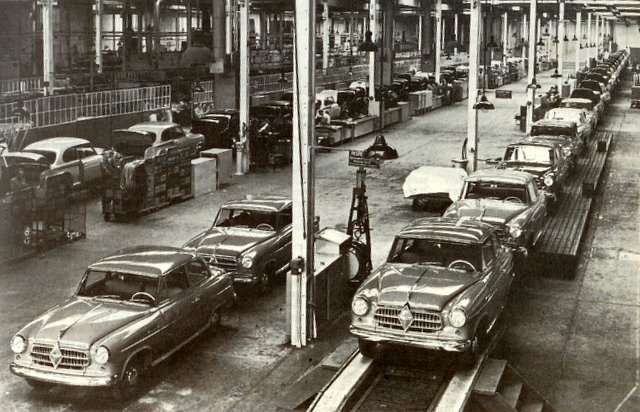
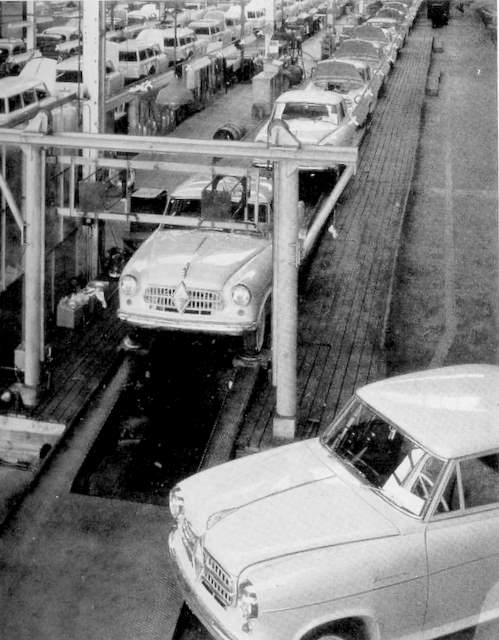
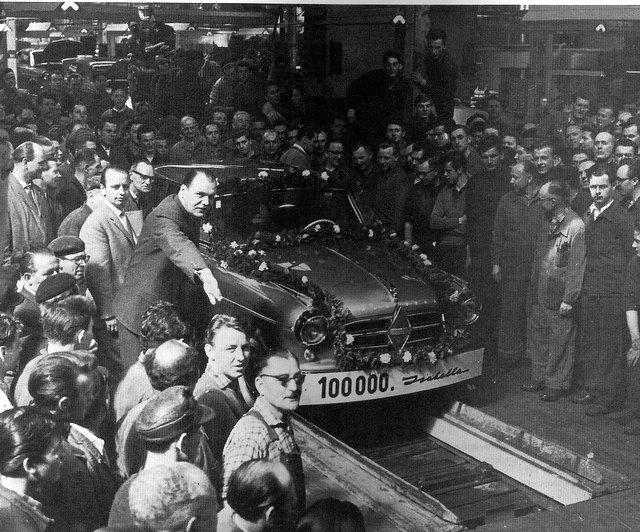
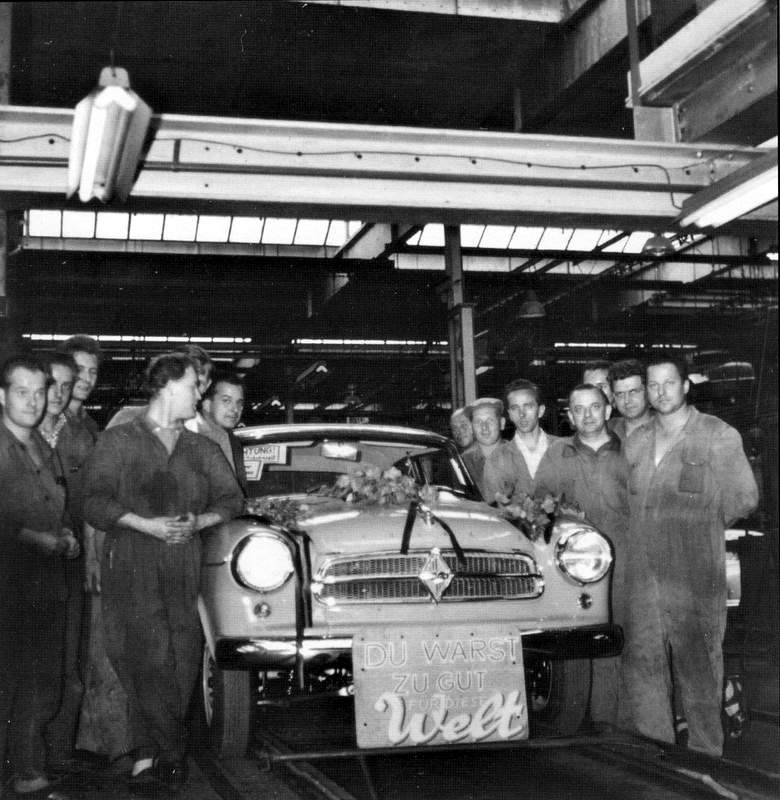
The Borgward Hansa 1500, in production between 1949 and 1952 was the first new car to be built after the war. From ’52 to ’54 came the Borgward Hansa 1800, same body style but a new dashboard which was to emerge again later. This lead on to the much more technically advanced ‘Isabella’ the most important model the company ever produced. The 1954 ‘Isabella’ was known as a Borgward, not a Borgward Hansa, although the cars kept the Hansa name on the bodywork until 1957. The ‘Borgward Hansa, as such, was continued with the 2400 Fastback from ’52-’55 and the big luxury Pullman-Limousine from 1955-’58. Lloyd produced the little 2 cylinder 300cc two stroke through various models, to the four stroke air cooled two cylinder LP 600 Alexander and the 1959 Lloyd Arabella 4 cylinder boxer engined 900cc. From 1950, Goliath produced the GP 700 (2 cyl.) including the beautiful Rometsch bodied GP 700 Sport to the Goliath 1100 (4 cyl.) from ’57 and the not too dissimilar and slightly more powerful Hansa 1100; from 1958 both available in extremely stylish Coupes.
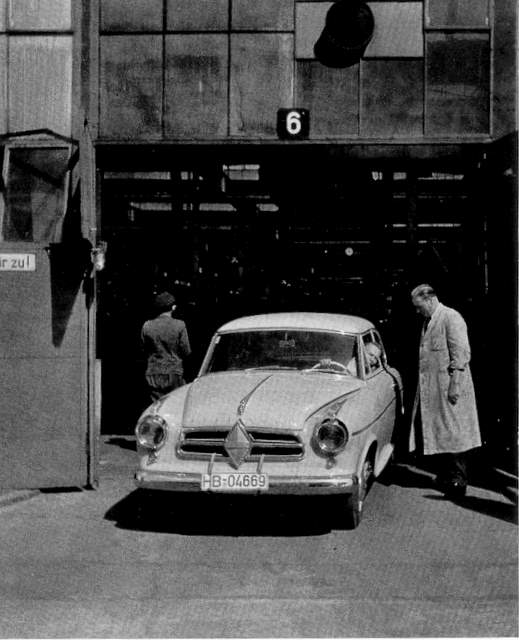
The big Combine, Borgward, Hansa, Goliath and Lloyd also produced an absolutely vast array of diesel and petrol lorries, commercial vehicles, vans, buses, army vehicles, fire engines, stationary engines, tanks, boats, electric vehicles and even a helicopter! For years large car manufacturers have disguised their pre-production prototypes so in the spring of 1954 the Borgward Combine sent out their new Hansa 1500 Saloon on their last few road tests before its official release. The engineers asked Carl for a name to replace the nameplate on the cars. Carl Borgward, not only the founder and owner of the company but the chief technician and designer, told them, “It does not matter what you put on it, you might as well call it ‘Isabella’.” It stuck!
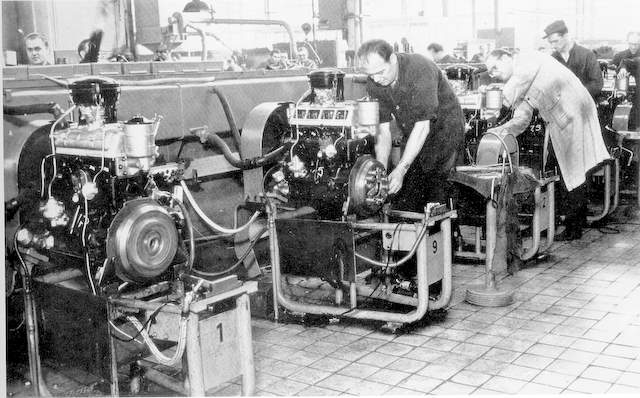
The ‘Isabella’ had a 1493cc inline 4 cylinder OHV engine of 75 x 84.5 mm bore and stroke with a single downdraft carburettor, fitted to an extremely short intake manifold inside the rocker box. This actually gave the appearance of an OHC engine as opposed to it being an extremely efficient pushrod powerplant of 60-bhp din (65 bhp SAE). The pretty car was spacious, thoroughly well made and comparatively light for its size at 1,000 kg. Light aluminium alloys were used extensively for the gearbox, cylinder head and on many engine parts, covers, etc., as opposed to the cheaper and noisier pressed steel.
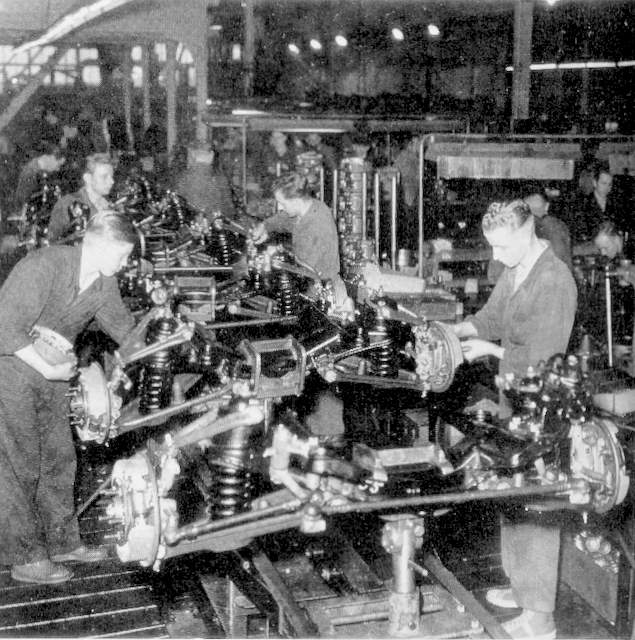
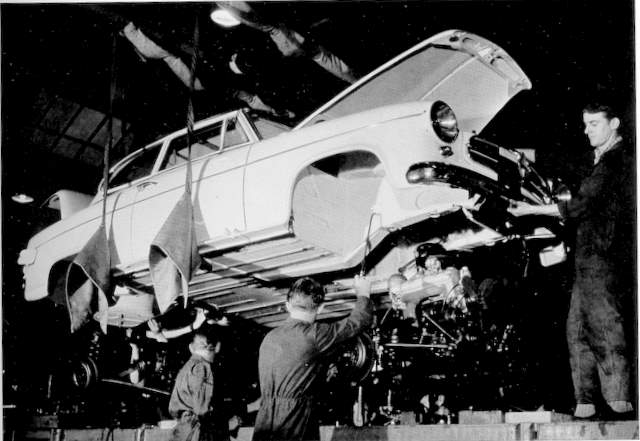
The body not only looked ultra new for 1954 it comprised a unit construction body and separate front and rear sub frames, the front one being rubber mounted. The front suspension featured unequal wishbones, coil springs and telescopic shock absorbers, checked by an anti roll bar. At the rear was a fully independent swing axle, again featuring coil springs and telescopic shock absorbers. The front of the axle was located by radius arms, pivoting in rubber bearings, the differential being mounted to the rear subframe in large rubber bushes. Very large hydraulic drum brakes were used with twin leading shoes at the front and single leading at the rear, complete with wide aluminium alloy shoes.
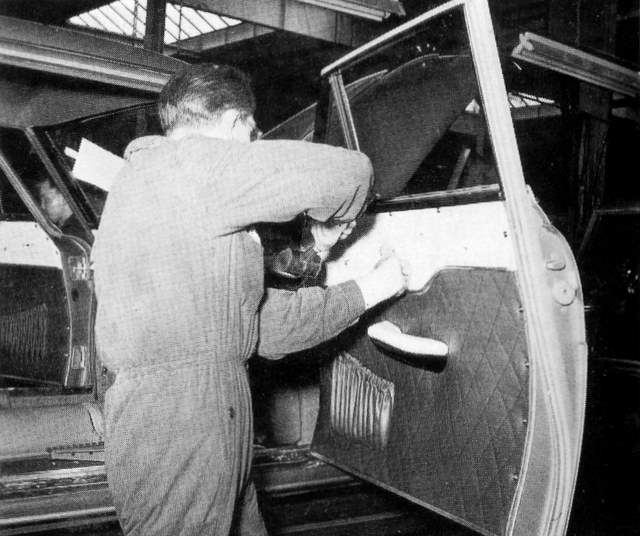
The gearbox had four all synchromeshed forward speeds and one reverse and was actuated by an extremely efficient and precise column gearchange marred only by its rather long throws. The handbrake was mounted under the dashboard and was the umbrella type that, with the bench seat, allowed three across the front and three across the back. A true 5 and occasional 6 seater. The polished Bakelite dashboard contained three large gauges, a clock/temperature gauge, petrol gauge and the speedometer. There was a cigarette lighter with a plug in map reading light, three ashtrays, one under the dashboard and two in the rear side panels. Ample storage space was provided comprising two door pockets, glove box and later supplemented by two retractable cord strung tubular framed map holders, mounted on the side of each footwell. Unusually, the doors had separate wind down quarter lights providing draft free ventilation. Separate heaters for driver and passenger were provided, as were separate controls.
The large white steering wheel actuated a lightly weighted and rubber coupled worm and peg or worm and roller steering box with three turns from lock to lock. The steering was very precise with a turning circle of around 32 feet; later cars being fitted with a hydraulic telescopic steering damper. The very well balanced weight distribution coupled with the low centre of gravity and all round independent suspension endowed the car with very high cornering powers. The fuel consumption was low at around 34 mpg and the top speed was 87 mph yet Carl F. W. Borgward kept the price low by a mixed price calculation with his other products. The only real vices were the vertical fixing of the front bulkhead to the floor making it slightly awkward to rest your feet and the rather low driving position of the front seats, but these were only minor faults against all the advantages. Although the factory-reconditioned units for items such as the engine and back axle were relatively expensive in 1954, there were no rivals.
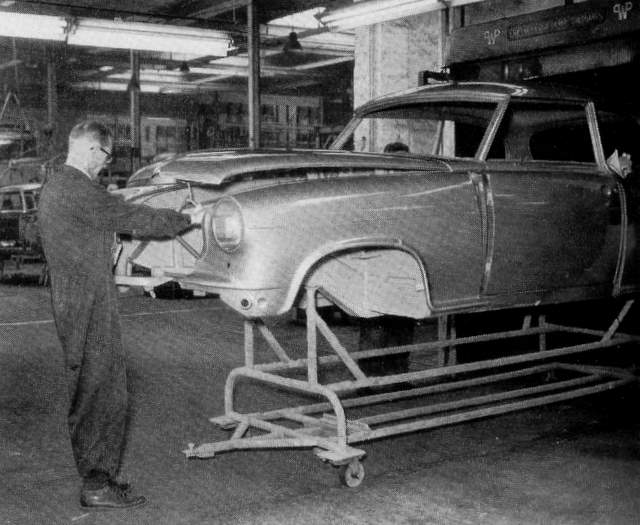
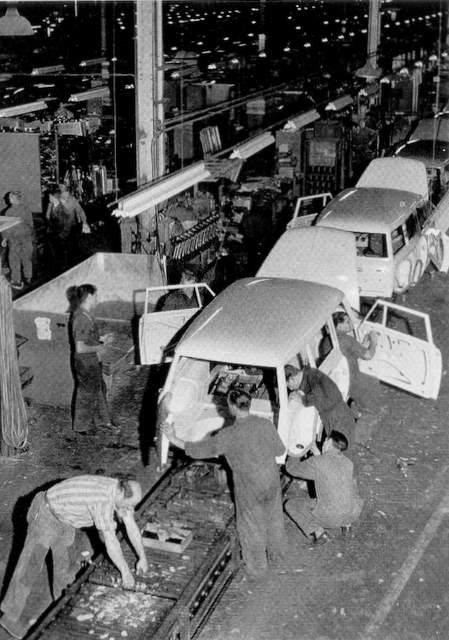
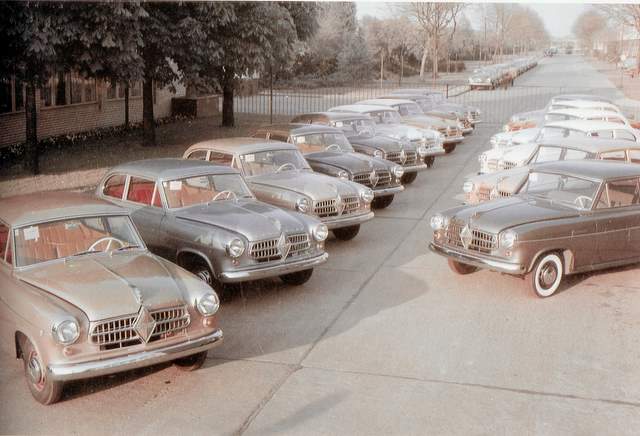
In 1955 the Isabella Combi, an Estate version, was added to the range. The special coachbuilder, Karl Deutsch of Cologne produced a 2+2 Convertible version of the Saloon, the Isabella Cabriolet and 2+2 fixed head Coupe called the Deutsch Coupe. The Isabella Cabriolet was an outstandingly attractive car and at the time was thought of as one of most beautiful cars built in Germany. Although only 23 were built of the Deutsch Coupe, this was an important car as it was the ‘missing link ” between the Isabella Saloon and the yet to be built (totally by the factory) Isabella Coupe. Output rose to 26,378 cars and Borgward were now in second place behind Volkswagen in the German sales statistics!
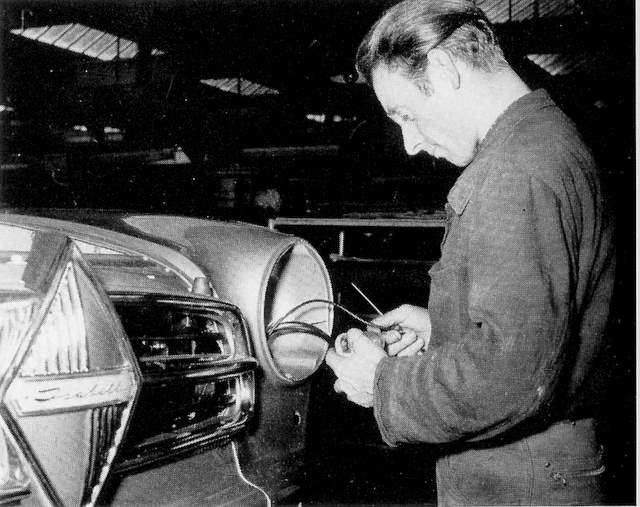
At the Frankfurt Motor Show (IAA) in September 1955 the company demonstrated the new Isabella TS. The compression ratio was increased from 7.2:1 to 8.2:1, the exhaust and inlet valves were enlarged, pistons and bearings strengthened and the original carburettor was replaced by a large twin choke downdraft Solex. Engine output was increased to 75-bhp din (82 bhp SAE) with the rpm increasing to 5200. This resulted in the car really flying. Top speed was up to 98mph and the freely revving engine was now able to propel the big car to 60 mph in 15.8 seconds. (The figures compared very favourably to the Mk 2 Jaguar 2.4.) Individual reclining front seats replaced the bench seat so the seating was now a very generous 5 seater. It was adorned with more chrome; rear lights; parking lights/additional indicators; extra sidestrips and around the window framework. It was now mooted to be probably the fastest 1500cc; volume produced; standard 5-seater saloon car; in the world! All this, and the fuel consumption had been improved to 38 mpg.